

Interceptive orthodontics
Acting early for better prevention
In children and teens, orthodontics makes it possible to act at the right time.
Interceptive orthodontics involves detecting and correcting certain issues as soon as they appear, to support the harmonious development of teeth and jaws. By intervening during growth, it’s often possible to guide oral development more simply and, in many cases, more effectively.
At Boca Dental Clinic, this approach supports growth gradually, while in some cases reducing the extent of treatment needed later on.

Why start early?
An initial orthodontic assessment can quickly identify certain irregularities.
It helps to:
- Detect alignment issues
- Assess jaw growth
- Prevent certain conditions from worsening
- Plan interventions at the right time
- Better track the development of the teeth
Starting early can reduce the complexity of future treatment and offer more options at the right time. In some cases, simple monitoring may be enough before deciding on treatment.
Common situations
Interceptive orthodontics may be recommended in several cases:
- Not enough space for teeth
- Teeth coming in irregularly
- Jaw misalignment
- Habits such as thumb sucking
- Mouth breathing
- Atypical tooth eruption
Each situation is assessed individually to offer a solution suited to the child and their development. The goal is always to intervene appropriately, without rushing treatment.

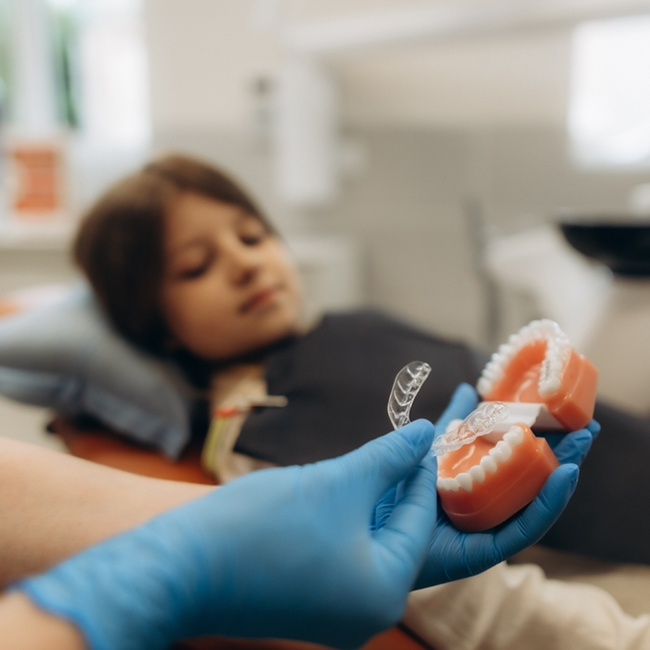
Treatment suited to growth
Treatments are designed to support the natural development of oral structures.
They may include:
- Myofunctional orthodontic appliances
- Growth monitoring
- Monitoring the eruption of permanent teeth
The goal is to guide developing structures rather than correct a more complex situation later on. This approach often helps optimize results and simplify future steps.
A reassuring approach for children
We pay close attention to younger patients’ experience.
Every appointment is adapted to create a reassuring, positive environment. We take the time to explain each step, answer parents’ questions, and put the child at ease.
Creating a positive first experience also helps build good habits and a calmer relationship with dental care.

Ongoing follow-up
nterceptive orthodontics is part of a long-term approach.
Follow-up allows treatment to be adjusted as the child grows, changes to be monitored, and harmonious development to be supported. Even when no immediate intervention is needed, monitoring may be recommended to act at the most appropriate time.
Book an appointment
An early assessment can make all the difference.